The Forces of Nature by Kelland Terry, Ph.D.
The virtual particle that is to become an elastic string is ejected through a portal. My model suggests there are unique portals for magnons, electons, and gravitons.
An examination of the photon’s string cycle shows that strings are made in stages until a full complement of strings is created during one string cycle. We know 299,792,459 electons are created for every magnon during one cycle. If the photon creates 100 free n-magnons (one unit) during one string cycle, it could do so by using just one portal for n-magnons, located on the sphere composed of n-goo. The n-magnon portal would eject one n-magnon virtual particle at a time until all 100 had been ejected. For every n-magnon portal there would be 299,792,459 electon portals on the other sphere. Each portal would eject 100 electon virtual particles in the same time frame needed for one magnon portal to eject 100 magnons. For ease in discussion, one unit of electons would be equivalent to 29,979,245,900 electons. The electons ejected from one sphere would have the same mass and energy as the magnons ejected from the other sphere. The two spheres would be in balance.
Although the number of electon portals contemplated is large, each portal is extremely small compared to a magnon portal; in fact, the size of the portal opening for one magnon is the same as the combined area of 299,792,459 electon portals. It is envisioned that e-electon portals are distributed at random on one sphere, and p-electon portals are distributed at random on the other sphere. Because photons are very large compared to virtual particles, there is plenty of room for a large number of portals even on a small radio wave photon.
Gravitons would have their own unique portals that arise at the center between the two spheres. Each graviton is composed of n-goo and s-goo in random fashion that makes each graviton unique. This feature does not allow them to bind and create a force of attraction, nor does it permit them to bind and create a force of repulsion. Gravitons are thought to be much smaller than any other string, and consequently their portals are that much smaller. I will take this subject up again at a later date.
The model holds that in one string cycle, one sphere is making two units of n-magnons and one unit of p-electons, and the other sphere is making one unit of s-magnons and two units of e-electons. This suggests that retraction and integration of magnon and electon strings into primordial goo takes longer than one half of a string cycle. This is the subject of my next blog. Till then be safe and in good health. Kelland—www.vestheory.com
Monday, January 16, 2012

Sunday, January 15, 2012
Self-induction of elastic strings
The Forces of Nature by Kelland Terry, Ph.D.
My model for the elastic string cycle and the self-induction of elastic strings demands that photons are creating e-electons and p-electons in the same time frame. We can only measure the one in excess because the other becomes bound to its complimentary twin. Interference experiments prove that the two fields cancel each other out as discussed in a future blog. This would also be true for magnons.
If electons and magnons share equally in compressing the photon during the string cycle, it means that 299,792,459 complementary electon pairs surround and constrict the photon as they retract compared to just one complementary magnon pair. Perhaps, then, there are something like 100 n-magnons bound to 100 s-magnons, which would mean there would be 29,979,245,900 e-electons bound to the same number of p-electons. The bound, retracting complementary pairs would cover the electron like an orange peel, which ultimately constricts the electron into an extremely dense particle. The energy of the retracting strings is stored as potential energy in the form of a dense elastic ball of primordial goo. A portion of this goo is destined to become virtual particles in the next string cycle. Kelland—www.vestheory.com
My model for the elastic string cycle and the self-induction of elastic strings demands that photons are creating e-electons and p-electons in the same time frame. We can only measure the one in excess because the other becomes bound to its complimentary twin. Interference experiments prove that the two fields cancel each other out as discussed in a future blog. This would also be true for magnons.
If electons and magnons share equally in compressing the photon during the string cycle, it means that 299,792,459 complementary electon pairs surround and constrict the photon as they retract compared to just one complementary magnon pair. Perhaps, then, there are something like 100 n-magnons bound to 100 s-magnons, which would mean there would be 29,979,245,900 e-electons bound to the same number of p-electons. The bound, retracting complementary pairs would cover the electron like an orange peel, which ultimately constricts the electron into an extremely dense particle. The energy of the retracting strings is stored as potential energy in the form of a dense elastic ball of primordial goo. A portion of this goo is destined to become virtual particles in the next string cycle. Kelland—www.vestheory.com
Friday, January 13, 2012
Composition of the photon’s electric and magnetic fields
The Forces of Nature by Kelland Terry, Ph.D.
In the previous blog, we saw how the speed of light is equal to magnitude of the photon’s electric field divided by the magnitude of the photon’s magnetic field.

The electric field E is proportional to the lines of electric force, which according to elastic string theory is proportional to the number of electons creating this field. In the same manner, the magnetic field B is proportional to the lines of magnetic force, which is proportional to the number of magnons creating this field. This leads to the conclusion that the number of electons emanating from a photon divided by the number of magnons is equal to the speed of light.
Thus,

This means there are exactly 299,792,459 electons for every magnon. I believe it is relevant that careful measurement of the speed of light shows that the number of electons is an even number when compared to magnons, just as expected if we are dealing with the number of elastic strings.
Since the energy density of the electon field is equal to the energy density of the magnon field, it must take 299,792,459 electons to equal the energy of one magnon. It is possible then that the mass of one magnon is equal to the mass of 299,792,459 electons.
In the next blog, I will review string cycles in view of this new information, and what this means for the self-induction of elastic strings. Till then be safe and in good health. Kelland—www.vestheory.com
In the previous blog, we saw how the speed of light is equal to magnitude of the photon’s electric field divided by the magnitude of the photon’s magnetic field.
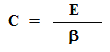
The electric field E is proportional to the lines of electric force, which according to elastic string theory is proportional to the number of electons creating this field. In the same manner, the magnetic field B is proportional to the lines of magnetic force, which is proportional to the number of magnons creating this field. This leads to the conclusion that the number of electons emanating from a photon divided by the number of magnons is equal to the speed of light.
Thus,

This means there are exactly 299,792,459 electons for every magnon. I believe it is relevant that careful measurement of the speed of light shows that the number of electons is an even number when compared to magnons, just as expected if we are dealing with the number of elastic strings.
Since the energy density of the electon field is equal to the energy density of the magnon field, it must take 299,792,459 electons to equal the energy of one magnon. It is possible then that the mass of one magnon is equal to the mass of 299,792,459 electons.
In the next blog, I will review string cycles in view of this new information, and what this means for the self-induction of elastic strings. Till then be safe and in good health. Kelland—www.vestheory.com
Thursday, January 12, 2012
Elastic strings dictate speed of light
The Forces of Nature by Kelland Terry, Ph.D.
James Maxwell was able to show that the speed of light could be calculated using the electric constant and magnetic constant in the following way.

I have found no easy way to use these symbols for the constants in a blog except as bitmaps, which is very cumbersome; therefore, in the next paragraph, ec becomes the electric constant and mc the magnetic constant.
Maxwell came to these conclusions:
1. Energy density of the electric field = ½ ec E^2,where ec is the electric constant with a value of 8.854 x 10^-12 F/m, and E is the electric field, which is a vector force. The value of this constant was determined in the laboratory by experimentation. This made it possible for Maxwell to calculate the velocity of light.
2. Energy density of the magnetic field = ½ B^2/mc, where mc is the magnetic constant with a value of 4pi x 10^-7 H/m, and B is the magnetic field, which is a vector force. The magnetic constant is a value derived to satisfy the requirements of the energy of the magnetic field.
The energy density of the electric field = energy density of the magnetic field. Thus: ½ ec E^2 = ½ B^2/mc
Because the energy density of the electric field and magnetic field are equal, we can combine the two equations and show the following relationship:

This shows very clearly why the ratio of the electric field and magnetic field equals the velocity of light. This is only possible if the fields, which are composed of elastic strings, are somehow intimately and directly responsible for the velocity of light. We will continue with this discussion in the next blog. Till then be safe and in good health. Kelland—www.vestheory.com
James Maxwell was able to show that the speed of light could be calculated using the electric constant and magnetic constant in the following way.

I have found no easy way to use these symbols for the constants in a blog except as bitmaps, which is very cumbersome; therefore, in the next paragraph, ec becomes the electric constant and mc the magnetic constant.
Maxwell came to these conclusions:
1. Energy density of the electric field = ½ ec E^2,where ec is the electric constant with a value of 8.854 x 10^-12 F/m, and E is the electric field, which is a vector force. The value of this constant was determined in the laboratory by experimentation. This made it possible for Maxwell to calculate the velocity of light.
2. Energy density of the magnetic field = ½ B^2/mc, where mc is the magnetic constant with a value of 4pi x 10^-7 H/m, and B is the magnetic field, which is a vector force. The magnetic constant is a value derived to satisfy the requirements of the energy of the magnetic field.
The energy density of the electric field = energy density of the magnetic field. Thus: ½ ec E^2 = ½ B^2/mc
Because the energy density of the electric field and magnetic field are equal, we can combine the two equations and show the following relationship:

This shows very clearly why the ratio of the electric field and magnetic field equals the velocity of light. This is only possible if the fields, which are composed of elastic strings, are somehow intimately and directly responsible for the velocity of light. We will continue with this discussion in the next blog. Till then be safe and in good health. Kelland—www.vestheory.com
Wednesday, January 11, 2012
The speed of light
The Forces of Nature by Kelland Terry, Ph.D.
The speed of light has been studied by a number of individuals from various countries around the world for more than 300 years. In the 1600s, Galileo attempted to determine its velocity by using two lanterns separated by a great distance. He concluded that the speed of light was either instantaneous or had great velocity. Various other methods have been used since that time including observations of Jupiter’s moons, aberration of star light, toothed wheels, rotating mirrors, etc. Values obtained ranged from 214,000,000 meters per second to 315,000,000 meters per second.
In 1862, a Frenchman by the name of Foucault used rotating mirrors to estimate its speed at 298,000,000 m/s. A few years later, James Clerk Maxwell discovered that the velocity of light could be calculated using its magnetic and electric properties. This method arrives at 299,781,000 m/s for the speed of light. This is only an estimate because the electric property used in the equation is determined by experimentation.
At the present time, the velocity of light is determined by using a laser light of known frequency and wavelength. This allows the speed of light to be calculated with great accuracy.
Photon speed = wavelength x frequency = 299,792,459.0 meters per second plus or minus just 0.0008 meters per second.
I believe it is more than mere coincidence that the remainder is zero. This will become clear in future blogs.
In the next blog, I will discuss how Maxwell was able to calculate the speed of light using its magnetic and electric properties. Till then be safe and in good health. Kelland—www.vestheory.com
The speed of light has been studied by a number of individuals from various countries around the world for more than 300 years. In the 1600s, Galileo attempted to determine its velocity by using two lanterns separated by a great distance. He concluded that the speed of light was either instantaneous or had great velocity. Various other methods have been used since that time including observations of Jupiter’s moons, aberration of star light, toothed wheels, rotating mirrors, etc. Values obtained ranged from 214,000,000 meters per second to 315,000,000 meters per second.
In 1862, a Frenchman by the name of Foucault used rotating mirrors to estimate its speed at 298,000,000 m/s. A few years later, James Clerk Maxwell discovered that the velocity of light could be calculated using its magnetic and electric properties. This method arrives at 299,781,000 m/s for the speed of light. This is only an estimate because the electric property used in the equation is determined by experimentation.
At the present time, the velocity of light is determined by using a laser light of known frequency and wavelength. This allows the speed of light to be calculated with great accuracy.
Photon speed = wavelength x frequency = 299,792,459.0 meters per second plus or minus just 0.0008 meters per second.
I believe it is more than mere coincidence that the remainder is zero. This will become clear in future blogs.
In the next blog, I will discuss how Maxwell was able to calculate the speed of light using its magnetic and electric properties. Till then be safe and in good health. Kelland—www.vestheory.com
Tuesday, January 10, 2012
Sources of energy for the photon’s string cycles
The Forces of Nature by Kelland Terry, Ph.D.
When a virtual particle that is to become a string is ejected into space, it remains attached to its source. For this reason, the string that develops behind the particle is stretched to a great length. This process stores potential energy in the stretched string. This means the energy needed to retract the elastic strings comes primarily from the potential energy stored in the string when it is ejected from the photon. We are dealing with a substance that has perfect elasticity, which allows the string to retract back to its source with great velocity. During retraction, there is no loss in energy because it is transformed to potential energy in the form of dense primordial goo inside the electron.
It is envisioned that gravitons exist for more than one string cycle. Gravitons do not bind to other gravitons because each is unique, but they aid in the constriction of the photon. As the photon spins on its axis, it winds the gravitons up like a fishing line on a reel, which constricts the photon forming two spheres. This requires a source of energy. In this case the energy comes from the photon’s spin angular momentum, which is dependent upon the rate a photon spins on its axis and its mass.
Spin angular momentum = spin velocity x mass x photon radius
String theory suggests that a photon spin on its axes because it travels through a matrix of gravitons that couples linear velocity to spin velocity as the photon rubs against the gravitons in its path. A slightly denser concentration of gravitons on one side would dictate direction of spin. I will explain how a photon maintains its linear velocity at a later date. This is a fascinating story that has much to do with Einstein and the special theory of relativity.
.
A photon with large mass, such as an x-ray, goes through its string cycle much faster than a lowly radio wave that has little mass. This is true because the x-ray photon has much greater spin angular momentum. The energy required for the radio wave photon to go through its string cycle is much less because the cycle is spread out over a much longer period of time. It takes less gas for a car to get to 60 miles per hour if it arrives at this speed slowly rather than putting the pedal to the metal, so to speak. In the end, however, both cars get to the same speed just as the radio wave photon and x-ray photon end up creating the same number of strings.
We know string cycles are directly related to the mass of the photon because this relationship holds: hf = mass x c^2. Here we see that f, the frequency of oscillation, is directly related to the mass of the photon. In this equation h is Planck’s constant and c is the velocity of light, which is constant for all photons.
In my next blog, I will examine the velocity of light. Till then be safe and in good health. Kelland—www.vestheory.com
When a virtual particle that is to become a string is ejected into space, it remains attached to its source. For this reason, the string that develops behind the particle is stretched to a great length. This process stores potential energy in the stretched string. This means the energy needed to retract the elastic strings comes primarily from the potential energy stored in the string when it is ejected from the photon. We are dealing with a substance that has perfect elasticity, which allows the string to retract back to its source with great velocity. During retraction, there is no loss in energy because it is transformed to potential energy in the form of dense primordial goo inside the electron.
It is envisioned that gravitons exist for more than one string cycle. Gravitons do not bind to other gravitons because each is unique, but they aid in the constriction of the photon. As the photon spins on its axis, it winds the gravitons up like a fishing line on a reel, which constricts the photon forming two spheres. This requires a source of energy. In this case the energy comes from the photon’s spin angular momentum, which is dependent upon the rate a photon spins on its axis and its mass.
Spin angular momentum = spin velocity x mass x photon radius
String theory suggests that a photon spin on its axes because it travels through a matrix of gravitons that couples linear velocity to spin velocity as the photon rubs against the gravitons in its path. A slightly denser concentration of gravitons on one side would dictate direction of spin. I will explain how a photon maintains its linear velocity at a later date. This is a fascinating story that has much to do with Einstein and the special theory of relativity.
.
A photon with large mass, such as an x-ray, goes through its string cycle much faster than a lowly radio wave that has little mass. This is true because the x-ray photon has much greater spin angular momentum. The energy required for the radio wave photon to go through its string cycle is much less because the cycle is spread out over a much longer period of time. It takes less gas for a car to get to 60 miles per hour if it arrives at this speed slowly rather than putting the pedal to the metal, so to speak. In the end, however, both cars get to the same speed just as the radio wave photon and x-ray photon end up creating the same number of strings.
We know string cycles are directly related to the mass of the photon because this relationship holds: hf = mass x c^2. Here we see that f, the frequency of oscillation, is directly related to the mass of the photon. In this equation h is Planck’s constant and c is the velocity of light, which is constant for all photons.
In my next blog, I will examine the velocity of light. Till then be safe and in good health. Kelland—www.vestheory.com
Monday, January 9, 2012
Magnetic fields, electric fields, and gravitational fields are self-inducing
The Forces of Nature by Kelland Terry, Ph.D.
The creation of elastic strings is cyclic and never ending because atoms and strings have perfect elasticity. The energy of the system during the string cycle is always constant. It is either conserved as potential energy in a stretched elastic string or as potential energy in the form of a super-condensed primordial elastic goo. My model for the self induction of the photon’s elastic strings is similar to the self induction of the force fields by an electron. It involves four stages.
• Beginning at that point in time when the photon has retracted all its strings, the internal pressure inside the photon is greatest, and the elastic strings have metamorphosed into dense primordial goo for the next round of strings.
• When the internal pressure reaches a critical state, the photon begins ejecting new virtual particles that develop into strings.
• Virtual particles continue to be ejected in stages until a maximum number of strings is achieved. At this point in time, the internal pressure of the photon has been reduced to a point where it can no longer eject virtul particles. However, the photon is surrounded by elastic strings that have begun to retract because of their perfect elasticity.
• This model requires that in addition to free strings that we measure with our instruments, the photon also creates p-electons and e-electons that bind and cover the photon like an orange peel. In the same manner, the theory holds that the photon is creating complementary magnons that bind and cover the outer surface of the photon. As the bound complementary strings retract back to their own portals, they force the surface of the photon inward, which causes the enclosed perfectly elastic goo to be compressed into primordial goo. The photon very quickly arrives at maximum internal pressure.
My model requires that in one string cycle two units of n-magnons are created for every unit of s-magnons. We cannot detect the s-magnons with our instruments because they rapidly become bound to n-magnons. In the next string cycle, two units of s-magnons are created and one unit of n-magnons. In this case, our instruments can detect one unit of s-magnons not bound to their complementary strings.
Just as magnons alternate as explained so do electons. In one string cycle two units of e-electons and one unit of p-electons are created, and in the next string cycle the opposite occurs.
There is one other piece to this puzzle. Gravitons exist for more than one string cycle, which allows them to wind up around the center of the photon as it spins on its axis. Gravitons are responsible for dividing the photon into two spheres.
The model holds that magnons and electons are equally important to the self-induction of force fields. It also holds that gravitons have a very important role in this process.
I know of no evidence that shows photons make n-magnons and s-magnons in the same string cycle; and in the same manner, I know of no evidence that photons make p-electons and e-electons in the same string cycle. On the other hand, I know of no evidence to show this is not true. Hopefully scientists will take this serious enough to think of a way to test this hypothesis.
In the next blog, I will discuss the sources of energy that drives the string cycles. Till then be safe and in good health. Kelland—www.vestheory.com
The creation of elastic strings is cyclic and never ending because atoms and strings have perfect elasticity. The energy of the system during the string cycle is always constant. It is either conserved as potential energy in a stretched elastic string or as potential energy in the form of a super-condensed primordial elastic goo. My model for the self induction of the photon’s elastic strings is similar to the self induction of the force fields by an electron. It involves four stages.
• Beginning at that point in time when the photon has retracted all its strings, the internal pressure inside the photon is greatest, and the elastic strings have metamorphosed into dense primordial goo for the next round of strings.
• When the internal pressure reaches a critical state, the photon begins ejecting new virtual particles that develop into strings.
• Virtual particles continue to be ejected in stages until a maximum number of strings is achieved. At this point in time, the internal pressure of the photon has been reduced to a point where it can no longer eject virtul particles. However, the photon is surrounded by elastic strings that have begun to retract because of their perfect elasticity.
• This model requires that in addition to free strings that we measure with our instruments, the photon also creates p-electons and e-electons that bind and cover the photon like an orange peel. In the same manner, the theory holds that the photon is creating complementary magnons that bind and cover the outer surface of the photon. As the bound complementary strings retract back to their own portals, they force the surface of the photon inward, which causes the enclosed perfectly elastic goo to be compressed into primordial goo. The photon very quickly arrives at maximum internal pressure.
My model requires that in one string cycle two units of n-magnons are created for every unit of s-magnons. We cannot detect the s-magnons with our instruments because they rapidly become bound to n-magnons. In the next string cycle, two units of s-magnons are created and one unit of n-magnons. In this case, our instruments can detect one unit of s-magnons not bound to their complementary strings.
Just as magnons alternate as explained so do electons. In one string cycle two units of e-electons and one unit of p-electons are created, and in the next string cycle the opposite occurs.
There is one other piece to this puzzle. Gravitons exist for more than one string cycle, which allows them to wind up around the center of the photon as it spins on its axis. Gravitons are responsible for dividing the photon into two spheres.
The model holds that magnons and electons are equally important to the self-induction of force fields. It also holds that gravitons have a very important role in this process.
I know of no evidence that shows photons make n-magnons and s-magnons in the same string cycle; and in the same manner, I know of no evidence that photons make p-electons and e-electons in the same string cycle. On the other hand, I know of no evidence to show this is not true. Hopefully scientists will take this serious enough to think of a way to test this hypothesis.
In the next blog, I will discuss the sources of energy that drives the string cycles. Till then be safe and in good health. Kelland—www.vestheory.com
Subscribe to:
Posts (Atom)